How a developer works out what your garden is worth
Developers value land backwards. They start with what the finished home would sell for. They take away everything it costs to get it built and sold, including their own profit. The amount left over is what they can afford to pay for the plot.
This is called a residual valuation, because the land price is the residual: the bit that is left. It explains why two gardens of the same size can be worth very different amounts. A garden is not priced per square metre like a field. It is priced by the home it can hold and by how much it costs to get permission and build on that particular spot.
Two terms you will hear. GDV (gross development value) is the total sale value of the finished homes. Abnormal costs are extra costs specific to one site, such as difficult drainage, tree removal or a long shared driveway that needs upgrading.
A worked example (illustrative numbers only)
The figures below are made up to show the method. They are not a valuation, not an offer from Summit, and not a guide to what homes or land sell for on your road. Your own numbers will be different, sometimes very different.
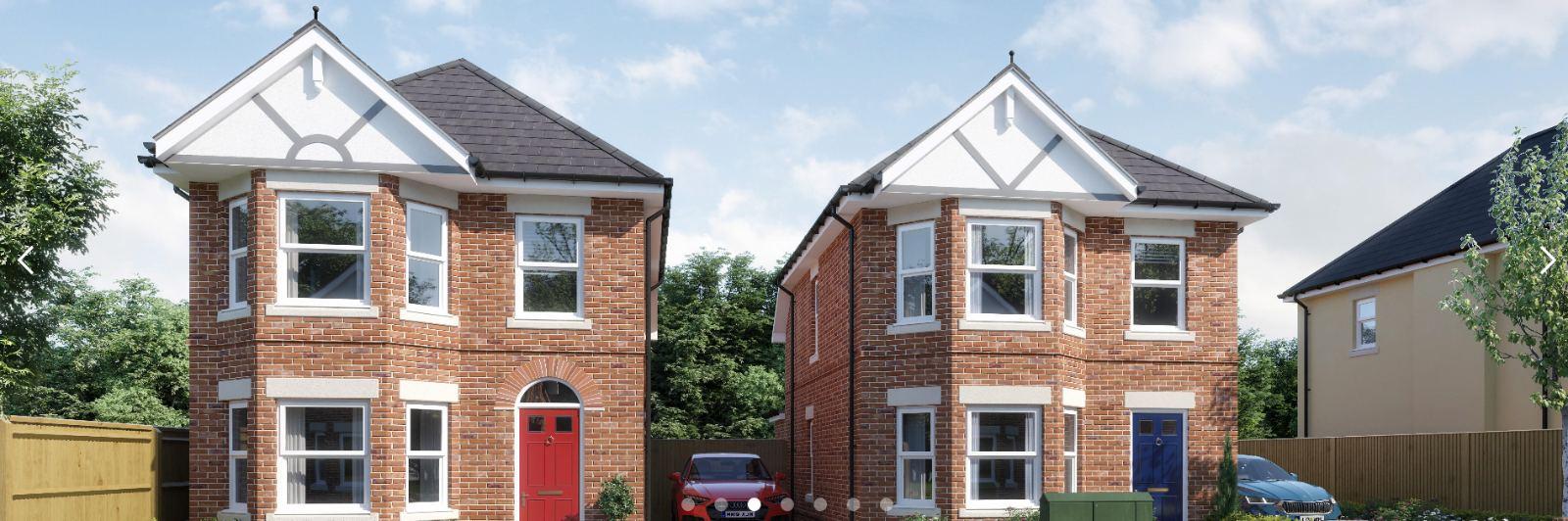
Imagine a garden with planning permission for one detached three-bedroom house of 120 square metres.
| Line | Illustrative amount |
|---|---|
| Sale value of the finished house (GDV) | £550,000 |
| Build cost (120 sq m at £2,000 per sq m) | −£240,000 |
| Professional fees: architect, planning, surveys, engineers | −£25,000 |
| Community Infrastructure Levy (120 sq m at £150 per sq m) | −£18,000 |
| Heathland, nutrient and other mitigation | −£15,000 |
| Services, drainage and other site-specific costs | −£15,000 |
| Contingency (5% of build cost) | −£12,000 |
| Sales and legal costs (3% of GDV) | −£16,500 |
| Finance and holding costs | −£15,000 |
| Developer's profit (20% of GDV) | −£110,000 |
| Costs of buying the land | −£4,000 |
| Left over for the land (the residual) | £79,500 |
So in this made-up example the plot is worth about £80,000 to a developer, even though the house on it sells for £550,000. That gap surprises many owners. It is not a trick. It is build costs, fees, levies and risk, all coming off the top before the land.
The residual is a small number made by subtracting big ones, so small changes matter. Here is what happens if just one assumption moves:
| What changes | Residual land value |
|---|---|
| Nothing (the example above) | about £79,500 |
| Sale price 5% lower | about £58,000 |
| Build cost 10% higher | about £54,000 |
| Mitigation costs £10,000 higher | about £69,500 |
A 5% fall in the sale price cuts the land value by about a quarter in this example. That is why developers are cautious, and why a quote can change between a first conversation and a formal offer.
What moves the number in Dorset and Hampshire
Heathland mitigation
Much of our area sits near protected heathland. New homes within 5 kilometres of it usually have to pay towards mitigation. A BCP Council planning report from 2017 describes a site beyond 400 metres but within 5 kilometres as potentially acceptable subject to mitigation. <cite index="24-5">A site beyond 400 metres of the Heathland SSSI, but within 5km, may be acceptable subject to appropriate mitigation.</cite> Closer than 400 metres is a much harder case. Our guide to Dorset heathlands and the 400 metre and 5 kilometre zones explains the zones.
The cost has two parts. One is a strategic access management and monitoring (SAMM) payment. A BCP planning committee report in April 2026 <cite index="26-4">listed £527 for a house and £360 for a flat, with the SANG and heathland infrastructure project element based on the specific project.</cite> A SANG is a suitable alternative natural greenspace, an area of land provided so that dog walkers and others are drawn away from the heath. Further south and east, a site within 13.8 km of the New Forest <cite index="28-7">may also owe a New Forest mitigation contribution.</cite> Amounts change, so treat any figure as a guide and check with the council.
Source: Eastern BCP Planning Committee reports pack, 16 April 2026 (BCP Council)
Nutrient neutrality
Nutrient neutrality means a new home must not add to nutrient pollution in a protected river or harbour. In our area, Natural England's list of affected catchments <cite index="44-1">includes Poole Harbour (Dorset Council and BCP), the Solent (including New Forest District) and the Hampshire Avon (including BCP, Dorset and New Forest).</cite> Broadly, <cite index="42-4">Poole Harbour and the Solent are nitrogen issues, while the River Avon is about phosphorus.</cite> Our article on Poole Harbour nitrogen neutrality goes deeper.
For a developer this is a cost, and sometimes a delay while credits or offsetting land are found. Natural England <cite index="48-5">sells nutrient credits in Poole Harbour.</cite> The Planning and Infrastructure Act 2025 <cite index="47-3">tasks Natural England with developing Environmental Delivery Plans to address nutrient pollution from 2026.</cite> One consultancy's October 2026 summary <cite index="48-9">reports that nutrient neutrality still applied in all 27 catchments and that none of these plans had yet been made.</cite> So for now, assume it still affects your plot's value.
Source: Nutrient Neutrality (Natural England)
Source: Nutrient Mitigation Scheme: clarification of Natural England's role (Natural England)
Community Infrastructure Levy (CIL)
CIL is a charge councils make on new floor space to help pay for local infrastructure. <cite index="2-1">It is charged per square metre of additional floor area and rises each year on 1 January.</cite> Rates differ a lot by council and by zone, so the same house can carry a very different bill depending on where it stands. These are published figures, shown to illustrate the spread, not to plug into your own sums:
- <cite index="1-4">Poole area, 2025 rates: £141.40 per sq m in central and north Poole (zone C) and £282.80 in Lilliput, Branksome Park, Sandbanks and Canford Cliffs (zone A).</cite>
- <cite index="2-2">Dorset Council's East Dorset area, 2026: £209.79 per sq m for schemes of 10 units or fewer.</cite>
- <cite index="5-2">New Forest District Council, 2026: £123.08 per sq m (rounded) for residential development.</cite>
BCP Council also <cite index="51-2">published a draft charging schedule in April 2024 that would replace the three older ones.</cite> I could not confirm its current status or the Bournemouth and Christchurch rates, so ask the council which schedule applies to your postcode. Some buyers, such as someone building their own home, <cite index="54-9">may qualify for self-build relief,</cite> which can change what they can afford to pay.
Source: Poole Community Infrastructure Levy (BCP Council)
Source: Community Infrastructure Levy Charging Rates 2026 (Dorset Council)
Source: How the Community Infrastructure Levy is calculated (New Forest District Council)
Biodiversity net gain (BNG)
BNG is a rule that most new developments must leave habitats measurably better, usually by 10%. The rules changed recently. <cite index="60-2">From 6 August 2026 there is a new exemption for the smallest developments, unless on-site priority habitat is harmed.</cite> <cite index="59-3">It applies where the site area within the red line boundary is 0.2 hectares (2,000 square metres) or below.</cite> The red line is the edge of the planning application site, which can be bigger than the house footprint. <cite index="60-3">The old self-build and custom-build exemption was removed.</cite>
For a typical garden plot under 0.2 hectares, that can mean one less cost. For a larger garden, BNG may still apply and the buyer will price it in.
Source: Biodiversity Net Gain: amendments and transitional arrangements published (Defra)
The plot itself
Beyond the local charges, the physical plot drives value. A developer will look at:
- Access. A wide, legal route in matters more than almost anything. A narrow shared drive is a common deal-breaker.
- Shape and size. Enough room for a sensible house, parking, and gardens for both the new home and your existing one, without overlooking.
- Trees, levels and drainage. Protected trees, slopes and flood risk add cost or reduce what can be built.
- What homes sell for nearby. This is the biggest lever in the residual, as the sensitivity table shows.
- What else the plot could hold. Sometimes two smaller homes work better than one large one, and that changes the sums.
We cover size and shape in more detail in is my garden big enough to build a house on.
Does planning permission change the figure?
Yes. Land with consent is worth more than land without it, because the biggest risk has gone. But getting permission costs money and time, and there is no guarantee it will be granted. A buyer who takes that risk will usually pay less upfront than for a plot that already has consent. Selling land with or without planning permission compares the routes.
One example from our own work is Livingstone Road in Wimborne. Planning was granted for a detached bungalow on a plot severed from an existing property with a very large rear garden.
Tax: check before you sell
Selling part of a garden can create a Capital Gains Tax bill, or it can be covered by private residence relief. HMRC's manual says that <cite index="74-4">if the garden and grounds, including the house site, do not exceed 0.5 hectares, relief is automatically available for the whole area.</cite> The order of sale matters. <cite index="74-6">Land sold separately after the house has been sold will not qualify.</cite> Larger gardens can still qualify, but <cite index="73-5">the larger area has to meet a stringent statutory test.</cite>
This is a general outline, not tax advice. Speak to an accountant or tax adviser before you exchange contracts.
Source: CG64815 - Private residence relief: permitted area: area automatically relieved (HMRC)
Source: CG64800 - Private residence relief: permitted area: introduction (HMRC)
How to get a realistic figure
- Note your plot's size, access and any trees, plus how close you are to heathland and which river catchment you are in.
- Look at recent sold prices for new or newly built homes close by, not just older houses.
- Ask more than one buyer for a figure and ask what assumptions sit behind it.
- Ask how the sale would be structured: outright, conditional on planning, or an option. Each splits risk differently, and you should also ask whether the buyer wants an overage clause.
- Get your solicitor to check title, boundaries, rights of way and any restrictive covenants before you agree anything.
A higher headline offer is not always the better one. If it depends on planning, a long timeline or a later price reduction, it may be worth less than a lower price that is certain. Read the conditions as carefully as the number.
What to do next
If you are wondering what your garden could be worth, start with a conversation. Tell us the address, roughly how much land you have and where access would be. We will tell you honestly whether it looks workable and how we would approach the numbers. There is no pressure, and you can say no at any point.
Summit funds its own purchases, so there is no mortgage or investor to wait for, and we can also provide finance for things like bridging loans and developments if that is ever useful. Our selling garden land page explains how it works, or you can call us on 01202 836 215.